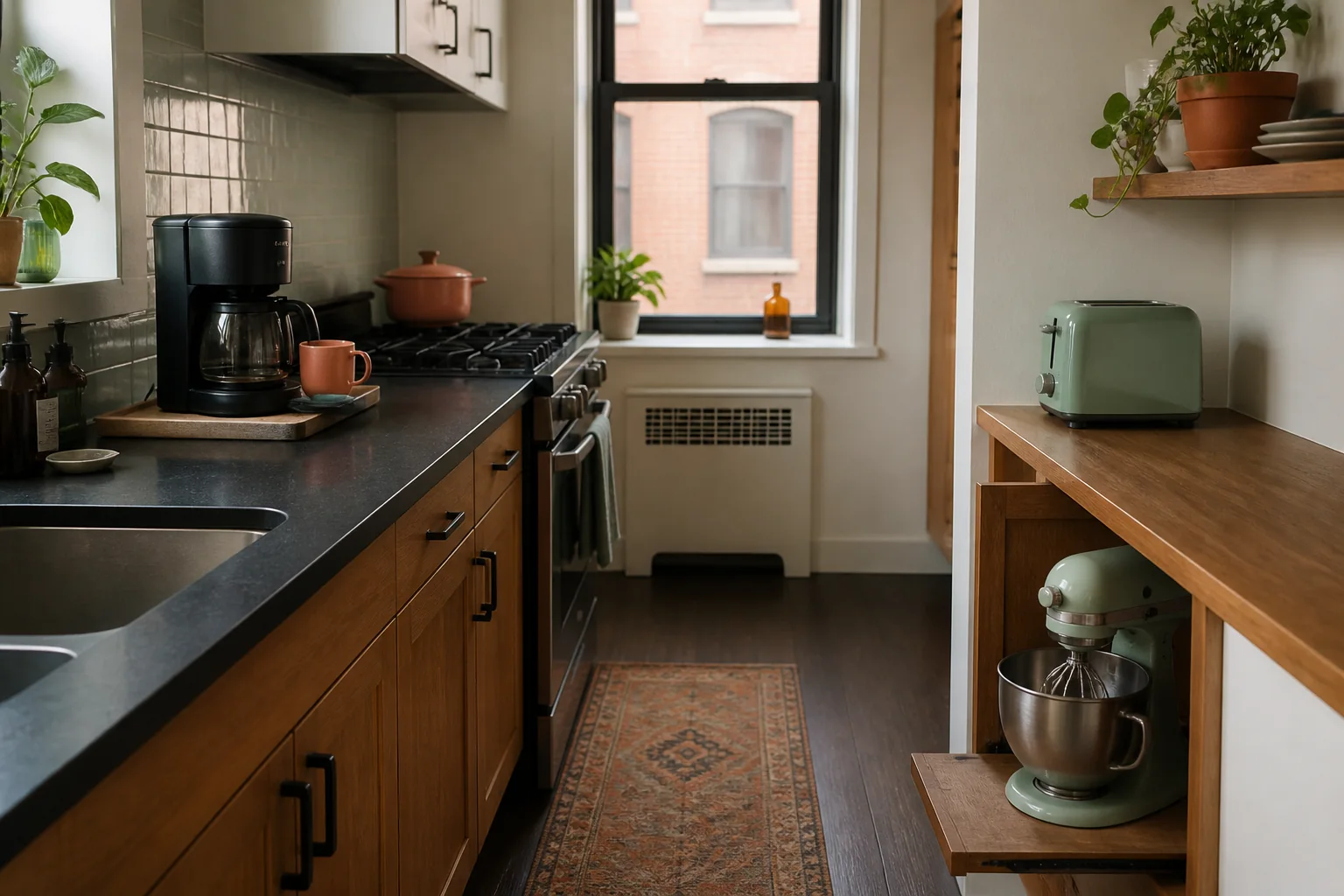
Planning checklist / source synthesis
Measurement Bench
Planning appliance storage around measured operating limits.
- Planning checklist based on source synthesis.
- No first-hand measurements or tests are claimed.
- Concept illustrations do not count as evidence.
Appliance width, depth and height including handles
Lid, drawer and door operating path
Ventilation and heat clearance stated in the exact manual
Full appliance weight including removable vessels
Storage-shelf dimensions and verified load information
Outlet reach without stretching, pinching or heating the cord
Clear lifting route between storage and operating position
Decision rules
- Keep a frequently used appliance on the counter only when its operating position meets the exact manual.
- Place occasional manageable appliances near waist height to reduce awkward lifting.
- Keep heavy, hot or awkward appliances on a stable low surface rather than overhead.
- Measure the full operating envelope including handles, lids, steam, vents and cord position.
- Keep appliances and cords away from sink water and cooking heat.
- Unplug small appliances when they are not in use according to official fire-safety guidance.
Separate storage fit from operating safety
A cabinet may fit an unplugged appliance while remaining unsuitable for operating it. The appliance manual controls ventilation, heat, steam and electrical requirements. A neat appliance garage is not an operating location unless the exact model instructions allow that setup.
Measure the body plus every part that moves. Open the lid, drawer or door and trace the steam or vent direction named in the manual. Record the cord exit and plug clearance without stretching the lead.
Assign the parking zone by frequency
A daily appliance may justify counter space when it can operate safely there. A manageable weekly appliance can move to a nearby waist-height cabinet or stable cart. A rare appliance can sit farther away only when the lifting route remains comfortable.
Frequency is a planning input rather than permission to ignore the prep zone. If a daily appliance blocks the only usable work surface then give it a measured lift-away position or reconsider whether the kitchen needs that model.
Use full weight and grip in the decision
Weigh the appliance with its bowl, basket, lid and common attachments. Notice where hands can grip it without touching sharp or loose parts. Heavy or awkward equipment belongs low on a stable surface rather than above shoulder height.
Rehearse the move with the doors open. The route should not require twisting around a handle, crossing a wet floor or setting the appliance on an unstable intermediate surface. Check shelf condition and load information before assigning dense equipment.
Protect heat, vents and cord routes
Keep appliances and cords away from sink water, stovetop heat and combustible clutter. The U.S. Fire Administration advises unplugging small appliances when they are not in use. Follow the exact model instructions when they are more restrictive.
Do not use an extension cord or route a cord through a door unless the manufacturer documentation permits it. Stop using an appliance with a damaged cord, loose plug or unusual heat then follow the manufacturer's service guidance.
Audit what earns the counter
For two weeks note what is used and what only collects residue. Keep an appliance visible when the safe operating setup and use frequency justify the footprint. Move occasional items only when the new shelf does not create a difficult lift.
When two appliances duplicate a task compare the routine rather than the marketing feature list. Reducing one low-use appliance can recover more usable space than adding another shelf or cart.
Trade-offs
- Storing appliances out of sight clears the counter but adds setup and lifting effort.
- A mobile cart adds flexible parking but consumes floor area.
- Keeping a daily appliance visible uses worktop space but can reduce repeated lifting.
Who this suits
- Small kitchens where several appliances compete for one work surface.
- Readers who can safely move occasional appliances to nearby storage.
- Households willing to check each exact appliance manual.
Who should skip this
- The appliance manual or model-specific clearance requirements are unavailable.
- The storage shelf condition or load information cannot be verified.
- The appliance cannot be moved without an unsafe lift or blocked sightline.
- The only proposed operating position is enclosed, wet or exposed to cooking heat.
- Electrical work or new outlets would be required.
Sources and claim scope
- Home Electrical Safety ChecklistU.S. Consumer Product Safety Commission
Countertop appliances and their cords should stay away from hot surfaces and sink water unless the exact installation uses the protection described by the source.
- Appliance and Electrical Fire SafetyU.S. Fire Administration
Electrical appliances need sound cords, appropriate outlets and disconnection when not in use when guidance calls for it.
- Frequently Asked QuestionsInstant Pot
Countertop appliance placement and operating clearance should follow the exact product documentation.
- Countertop Oven Owner's ManualKitchenAid
Appliance manuals define model-specific setup, electrical and operating requirements.
- Home Electrical Safety ChecklistU.S. Consumer Product Safety Commission
Small appliances need sound cords, stable placement and use that follows the manufacturer instructions.